

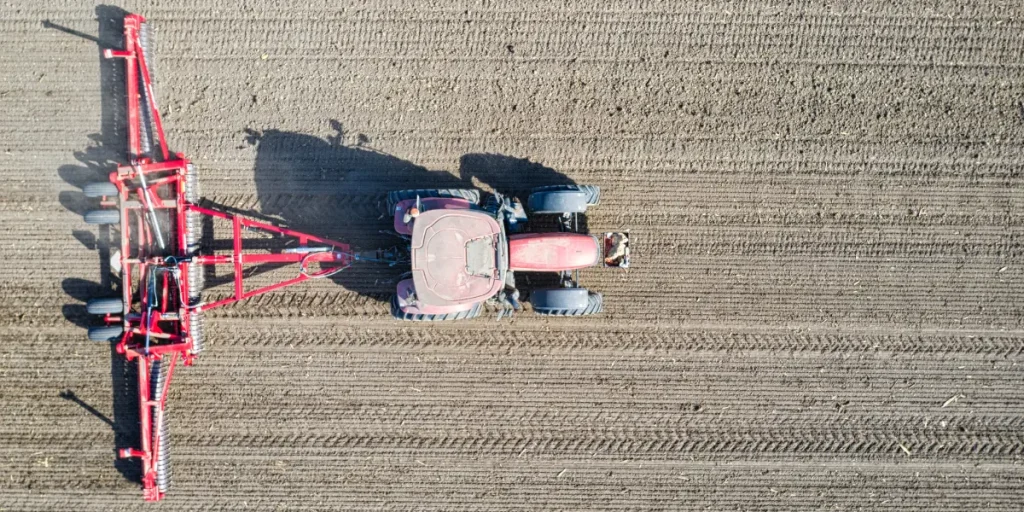
Key Trends Defining This Era of Agriculture and Food Production
Agriculture is the world’s oldest and largest industry. Its success remains crucial for economic development and long-term progress. At its most basic, agriculture feeds the world. But the industry now faces an unprecedented challenge: how to provide affordable, reliable food for a global population expected to surpass nine billion within the next few decades.
In the United States, labor availability has become a persistent pain point, with fewer workers entering or staying in the field. At the same time, rising input costs, climate volatility and complex financing structures add layers of difficulty to what has always been an unpredictable business.
Against this backdrop, private equity and venture capital firms have taken a stronger interest in agriculture, particularly in agricultural technology (AgTech). Their goal is to modernize food production, create more sustainable systems and bring greater efficiency to an industry under pressure. But will outside capital truly ring in a new era for agriculture, or will the realities of farming prove more resistant to disruption than investors anticipate?
Understanding Agricultural Leadership Trends
Traditionally, agricultural businesses were passed down through families. Succession planning was simple. As older generations reached retirement, younger relatives took the reins. That model is breaking down as fewer young people choose to stay in farming. The talent pool for future agricultural leaders has shrunk, leaving many farm owners without clear successors.
One way that agricultural organizations bridge this gap is through education. Communities with strong agricultural programs in schools often introduce students to farming at an early age. Career fairs, classroom visits and on-site learning opportunities with local businesses can inspire future leaders to consider careers in agriculture. These initiatives reinforce agriculture’s central role in sustaining communities.
When succession occurs outside the family, which is a relatively new concept in this space, open communication is vital. Leaders must articulate how they plan to honor the legacy of the organization while steering it toward future growth.
The Biggest Agriculture Challenges
Modern agriculture faces a host of challenges that go beyond simple supply and demand.
- Labor availability: Farmers consistently cite workforce shortages as their top concern. The physical demands of the job, combined with limited immigration pathways for agricultural labor, create ongoing uncertainty about who will plant, harvest and manage operations.
- Environmental conditions: Climate volatility, from droughts to floods to shifting growing seasons, makes planning difficult. Farmers are increasingly asked to produce more with less predictable conditions.
- Rising input costs: Seed prices, fertilizer and equipment have all experienced inflationary pressure. For smaller operators especially, these costs eat away at already thin margins.
- Financing difficulties: Agriculture’s timelines do not align neatly with the financial sector. While most investments are judged on three-to-five-year cycles, agriculture often requires patience over a decade or more. In many years, breaking even is considered a success. Financial institutions unfamiliar with these cycles sometimes hesitate to extend credit, which limits innovation and expansion.
These hurdles show why agriculture requires unique expertise and solutions, not just standard business playbooks.
Private Equity and Venture Capital Opportunities
Despite headwinds, agriculture is attracting strong investor interest from private equity and venture capital. AgTech, in particular, is ripe for innovation. Emerging technologies like biological inputs, next-generation crop protection, drone surveillance and precision irrigation promise to boost yields while reducing waste and environmental impact.
But for new investors, the learning curve is steep. Before pouring capital into new solutions, investors must understand farmer pain points. End users ultimately determine whether a product succeeds. An elegant technology that does not align with the realities of the farm will not find traction. By contrast, innovations that address real bottlenecks like labor efficiency, soil health and water use have a stronger chance of adoption and long-term impact.
Key Takeaways:
Agriculture sits at a crossroads.
The industry’s legacy of family ownership is giving way to new leadership models, often outside of traditional generational lines. Farmers continue to wrestle with labor shortages, environmental pressures, rising input costs and financing hurdles. At the same time, an influx of investment is fueling optimism that AgTech solutions can help meet these challenges head-on.
The most successful outcomes will come from balancing respect for agriculture’s heritage with bold new ideas. As private equity and venture capital firms enter the space, they will need to align closely with farmers and agricultural leaders to ensure innovations are practical, sustainable and impactful.

Executive Search
Agriculture is undergoing a unique moment. Let us find your next executive leader to ensure your team doesn't fall behind.
Learn more
Contingent Search
As this industry undergoes massive change, open seats can be costly. Our contingent team is prepared to fill your most urgent hiring gaps.
Learn moreOur Agriculture & Food Team

Eric Spell
VP – Practice Leader

Kacey Toews
Senior Associate Practice Leader

Michelle Moore
Senior Associate Practice Leader

Nichole Hammond
Senior Associate Practice Leader

Ashley Sorrell
Associate Recruiter
Insights




Subscribe to our Agriculture Newsletter.
Subscribe nowContact Us
If you're ready to connect with us, fill out the brief form below.